




How a CCD Screening Machine Improves Accuracy and Reduces Manual Inspection Time in Automated Production
In modern automated production lines, a CCD screening machine plays a crucial role in enhancing inspection precision and minimizing manual labor. By integrating advanced optical technology and intelligent algorithms, it enables fast, consistent, and highly accurate quality detection. For manufacturers seeking to boost productivity and maintain consistent product standards, investing in a CCD screening machine is a strategic step toward smarter, more efficient, and cost-effective production management.
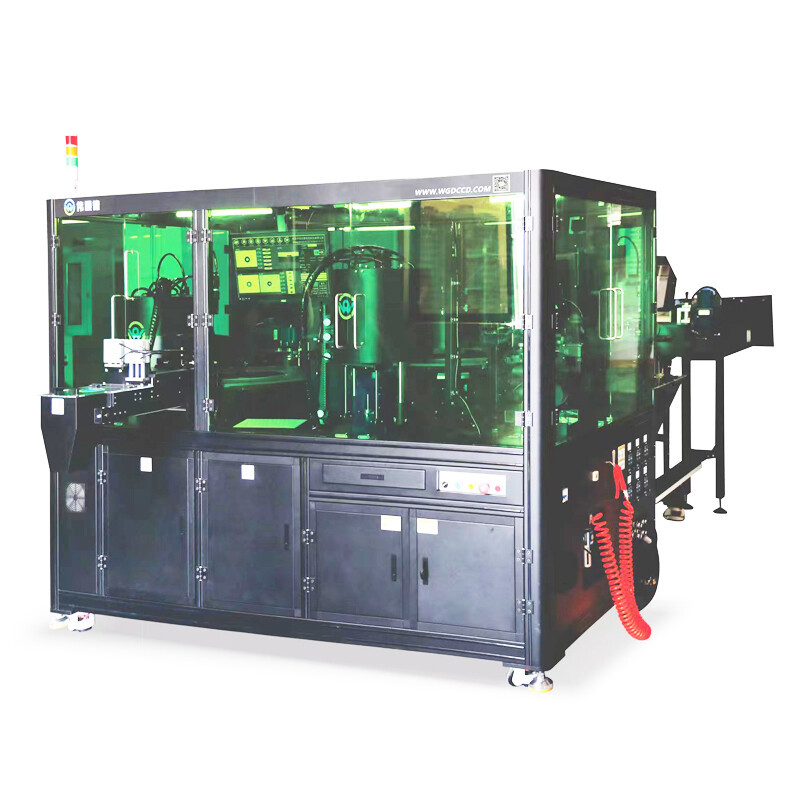
1. The Role of CCD Screening Machines in Modern Automation
A Charge-Coupled Device (CCD) screening machine leverages precision optical sensors and digital processing to detect product defects that are often invisible to the human eye. In the hardware, electronics, and rubber industries, where defect rates must stay below 0.5%, traditional visual checks struggle to meet such thresholds. CCD machines can achieve detection accuracy within a tolerance range of ±0.01 mm, far exceeding manual inspection capabilities.
Unlike manual inspection, which typically depends on 5–10 operators per production shift, one CCD screening system can replace an entire team. Its ability to operate continuously for 24 hours guarantees consistent detection without fatigue-related errors. As a result, product quality becomes both measurable and predictable, leading to a rejection rate reduction of more than 35% within the first six months of implementation.
Dongguan Weigude Optical Technology Co., Ltd., a subsidiary of Shenzhen Weigude Automation Equipment Co., Ltd., has been developing optical inspection solutions since 2010. Their experience in producing visual screw and nut screening machines, resistance and capacitance testing systems, and rubber inspection machines has shaped advanced CCD-based innovations ideal for high-speed automated lines.
These machines integrate artificial intelligence algorithms capable of classifying product types and defect patterns in under 0.2 seconds per unit. For small components such as screws or electronic capacitors, the throughput can reach up to 30,000 pieces per hour, depending on the complexity of the inspection profile.
2. Key Advantages of Using CCD Screening Machines
A CCD screening machine delivers multifaceted benefits that directly impact manufacturing efficiency, cost control, and long-term quality consistency. These benefits are especially relevant for decision-makers comparing investment returns and operational performance improvements.
The quantitative comparison highlights not only the throughput and precision advantage but also the significant operational cost savings. By reducing the manual inspection workforce, manufacturers commonly achieve payback periods within 8–14 months after installation.
Surpassing human performance consistency, the machine minimizes missed defects due to subjective visual fatigue, ensuring high-stability inspection standards over continuous operations exceeding 5,000 hours per cycle without recalibration.
3. How CCD Technology Enhances Accuracy and Reliability
CCD screening machines use optical sensors that convert light signals into electrical charges, which are then processed by high-speed image processors. The machine can analyze thousands of pixels per item—averaging 2–5 megapixels of analytical data—to identify even the slightest scratches, deformation, or color inconsistencies.
Typical error thresholds can reach ±0.005 mm for dimensional verification and 1–2 grayscale levels in surface color contrast assessment. Combined with lighting correction algorithms, the system adapts to environmental changes such as brightness shifts of ±15 Lux, ensuring reliability across various operating conditions.
The integration of industrial-grade lenses and precision conveyors—speeds adjustable between 0.1 and 2.5 m/s—optimizes synchronization between mechanical movement and image capture. These technological refinements allow the machine to sustain accuracy for more than 20 million inspection cycles before major maintenance is required.
Additionally, CCD inspection machines can implement real-time data exchange through Ethernet or OPC protocols, allowing connection to Manufacturing Execution Systems (MES). This integration provides digital traceability and streamlines rework analysis and batch control, meeting ISO 9001 and IATF 16949 quality standards.
4. Implementation and Operation Workflow in Automated Lines
Integrating a CCD screening machine into an existing production line typically follows five major phases: requirement assessment, system configuration, calibration, testing, and production launch. Each phase ensures compatibility with upstream and downstream automation components such as feeders, robotic arms, and packaging systems.
Dongguan Weigude Optical Technology Co., Ltd. provides modular system deployment that reduces implementation time to around 7–15 days depending on complexity. A key benefit for operators is the intuitive user interface allowing parameter adjustments and machine monitoring without advanced programming knowledge.
After commissioning, operators typically perform only weekly cleaning and monthly calibration checks, which take less than 30 minutes per task. The system’s self-diagnostic features detect 80% of issues automatically, alerting users before any production downtime occurs.

5. Choosing the Right CCD Screening Solution for Your Business
When selecting a CCD screening machine, decision-makers should evaluate key factors such as resolution level, inspection speed, error tolerance, and compatibility with production data systems. These aspects directly impact ROI and operational continuity in high-volume environments.
Weigude’s product portfolio covers inspection modules for screws from M1.0 to M12 sizes, capacitance measurement ranges between 0.1 μF and 1000 μF, and customizable lighting options from 4,000–6,500 K. Such flexibility ensures integration with specific parts geometries and inspection challenges.
- Consider sensor resolution between 2M to 8M pixels based on component size.
- Select sorting speed capable of 15,000–25,000 pcs/hour for mid-scale production.
- Ensure machine frame and surface treatments meet anti-static standards (10⁶–10⁹ Ω range).
- Request MES or ERP integration compatibility for digital traceability needs.
- Opt for local technical service support guaranteeing response times under 24 hours.
Evaluating these parameters ensures that the chosen CCD screening machine can sustain long-term stability, adaptability, and profitability. Decision-makers who analyze total lifecycle cost, including maintenance cycles (typically every 6–8 months), often realize additional savings of up to 20% on operational expenditure.
6. FAQs: Common Questions about WGD CCD Screening Machines
How long is the typical delivery time for a custom CCD screening machine?
For standard configurations, the lead time is usually 25–35 working days. Customized models involving multiple camera modules or specialized lighting systems require 40–50 days depending on component availability.
What level of training is required for operators?
Basic training sessions of 1–2 days are sufficient for most operators to understand setup, operation, and cleaning. The software includes intuitive English and Chinese interfaces with automatic defect classification templates.
What are the common maintenance tasks?
Routine tasks include daily lens cleaning, weekly conveyor belt checks, and quarterly recalibration. The optical module typically requires full maintenance every 10,000 operating hours, which ensures continued defect detection accuracy of ≥99%.
Can CCD screening systems handle multi-type products in a single line?
Yes. The machine can store up to 100 inspection recipes and switch automatically using barcode or sensor triggering. This flexibility saves 30–45 minutes during product transitions, contributing to higher line efficiency.
Conclusion and Next Steps
A CCD screening machine significantly raises inspection accuracy, reduces manual labor requirements, and ensures the long-term competitiveness of manufacturing lines. By embedding intelligent optics and fast processing technology, it enables companies to maintain consistent product quality while enhancing operational efficiency.
Dongguan Weigude Optical Technology Co., Ltd. continues to drive innovation in automated optical inspection through decades of R&D. The company’s solutions cater to diverse industrial needs, from microelectronic components to precision hardware and rubber elements. Their technical service model emphasizes quick response, flexible customization, and comprehensive after-sales support.
Manufacturers seeking to optimize quality control systems and reduce manual inspection time can explore Weigude’s CCD screening solutions. Contact Weigude today to discuss your production requirements and discover a tailored optical inspection system built for your efficiency goals.
Get quotation now!